Person-centred counselling in Bingley
Helen Stone is an experienced, empathic and sensitive counsellor.
Helen will help you find your way forward.
Helen has extensive experience as a counsellor and therapist. To ask a question or book your first free session (in person or online), please get in touch below.
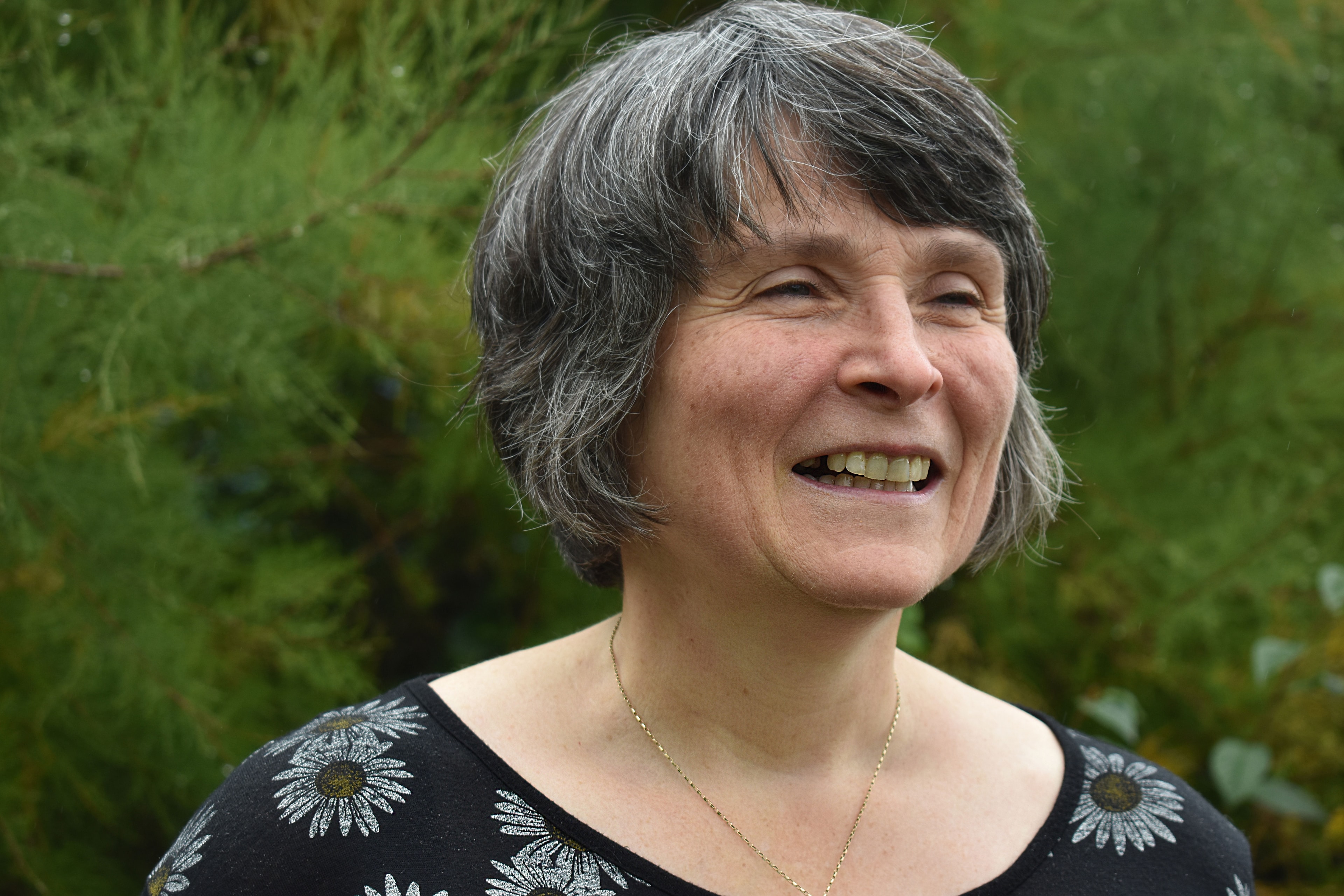
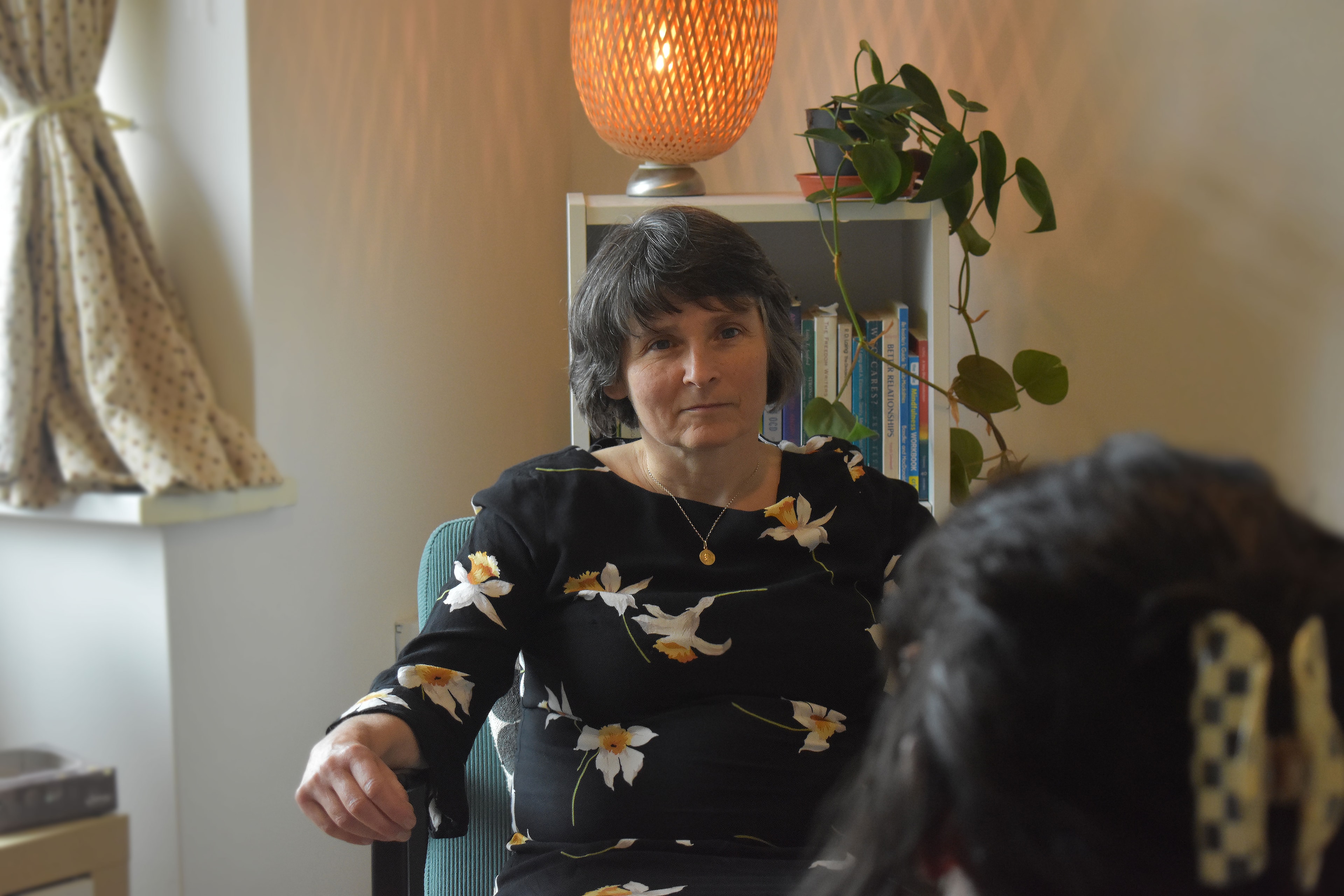
About Helen
I have been using counselling skills to help people in crisis since 1995, I became a fully qualified counsellor in 2003 and a psychotherapist in 2017.
I was drawn to train as a person centred counsellor because this approach helped me enormously when I was going through my own crisis many years ago.
I feel enormously privileged to have worked with many different people, from many different backgrounds. For some, all that was needed was a single session; for others, reworking damage from the past has taken years. But with each person I have worked with, I have witnessed their strength and resourcefulness and their instinct to find a way forward. I feel humbled and honoured to journey alongside all of those I have worked with over the years, and I look forward to working with people for many years to come.
My hobbies include Authentic Movement, a process of moving from the unconscious body and witnessing with real clarity, and learning to enjoy life.
Qualifications & training
Helen is a registered member of the UK Council for Psychotherapy and Processwork UK, working as a counsellor and psychotherapist with individuals and couples.
1993
Training in Person Centred Counselling Skills, followed by extensive help line experience
2003
Advanced Diploma in Therapeutic Counselling
2006
Traumatic Incident Reduction Training with the Traumatic Incident Reduction Association
2007
Post Graduate Certificate in Education
2010
Workshop with Margaret Warner, Working with difficult, fragile and psychotic process
2011
Diploma in Person Centred Supervision with Irene Fairhurst (who worked with Carl Rogers)
2023
Masters level Diploma in Process Oriented Psychotherapy (Processwork) and Facilitation with Individuals, Relationships and Groups
2025
Masters in Humanistic Counselling
Helen worked at Leeds Mind and at Solace, a charity for survivors of persecution and exile, as a volunteer counsellor. She ran groups offering Mindfulness and Dialectical Behaviour Techniques for the para-suicidal, and groups for men with anger issues, and incorporates parts work informed by Janina Fisher’s work on healing fragmented selves of trauma survivors.
Additional continued professional development
Bridging worlds — working with extreme states, living with HIV, heterosexism and homophobia, gender dysphoria, White Aware Antiracist Network and other work to develop awareness of my whiteness and unspoken whiteness norms, so I see the world more accurately.
Experience
Helen has experience working with people experiencing:
- Abortion
- abuse
- addiction
- adoption
- affairs and betrayals
- agoraphobia
- anger management difficulties
- anxiety
- Asperger's syndrome and the autism spectrum
- bereavement
- bipolar disorder / manic depression
- bullying
- cancer
- couples counselling
- dementia
- depression
- diagnosis of HIV/AIDS
- dissociation
- domestic violence
- eating disorders
- exploring their sexuality
- emotional abuse
- family issues
- feeling they are disappearing or wearing a mask
- finding their purpose in life
- gender dysphoria
- grief
- infertility
- loneliness
- low self confidence
- low self esteem
- miscarriage
- obsessive thought loops
- panic
- personality disorder
- physical abuse
- post-traumatic stress disorder
- postnatal depression
- pregnancy and birth
- psychosis
- redundancy
- relationship issues
- schizophrenia
- seeking more joy
- self harm
- separation and divorce
- sexual abuse
- sexuality
- spirituality
- stress
- suicidal thoughts
- trans issues
- trauma
- unhappiness
- work related stress and worrying
When we have missed out on stability and caring in our childhood, or when we have experienced neglect or trauma, the atmosphere of care and empathy in sessions is part of what supports us to recognise the parts of us that helped us survive, and the parts of us who can change the future.
Some of us aren’t quite sure why we are coming at first, but we just know we need someone to talk to. Whatever it is you are coming to talk about, Helen will welcome you. We can feel that our issues are too big or too small, or that we won’t be able to find the words to speak about things, and yet when we have someone who wants to listen to us, someone who accepts us for who we are, then somehow the words just come.
Many people meet prejudice in society, subtle signals that they aren’t welcome, and counselling can be a respite from the storm of discrimination — a place where you can simply be you.
How Helen Works
Counselling and psychotherapy have many overlaps, and you don’t need to know which you are seeking — Helen is both a counsellor and a psychotherapist.
At the core of the person centred approach is respect. Respect that we are all doing our best in the circumstances, and that if we are struggling that is because what we are facing is difficult to handle. A supportive relationship where we are not judged gives us space to understand ourselves, and frees us up to move forward. To further support people I trained in Processwork, working with trauma, anxiety, and couples.
The power in both Processwork and the person centred approach is that they follow you. Some approaches to counselling impose a way of working on you — for example, some will take you into the past, whereas others will encourage you to leave the past behind and focus on ways forward. Rather than imposing a rigid method, Helen’s approach changes and evolves with you. Whether that is starting with things that happened years ago or focusing on building the way forward, that is what we will do.

The Person Centred Approach
The person centred approach came out of what works in practice. When we experience a safe space where we can think around what is going on for us, a place where our emotions are also welcome, a place where we feel understood and respected, then we become clearer about what we need to talk about, we gain new understanding and find our way forward. The person centred approach is simple and effective. You might come to sessions knowing this is how you would like to work with Helen, or it might simply be how we end up working together.

Parts Work
For some it can seem like we are doomed to be unhappy because of early complexities in childhood or trauma. The good news is that because we found a way to survive the past, a new future can be built by bringing awareness to the parts of us that helped us survive. The parts that tenaciously protect us are good at spotting what is or might be unsafe. We can grow new ways to take care of ourselves, and the protector parts are relieved to find new ways to be. Along the way we can feel less lonely as we connect to more parts of ourselves and improve our inner team work and develop internal secure attachment. This process can feel like unmasking. This work is influenced by Internal Family Systems and Janina Fisher's work on Internal Secure Attachment.

Processwork
Processwork brings a quality of interest and curiosity to what is happening in the moment, and this awareness can help us connect to parts of ourselves that we didn't know were there. For example, many of us who are tense will automatically hold tension in our shoulders and arms; by following this tension we can discover two processes, the process of holding and the process of being held. Getting to know this innate wisdom is liberating. Processwork's roots are in Jungian psychology, Taoism, indigenous traditional wisdom, systems theory and even quantum physics, and it sees us in our societal context, so it is particularly useful for unlocking the social beliefs that make you stuck, or that give rise to addictions, psychotic episodes and inner voices.

Anxiety and Repeating Thought Loops
Anxiety has its origins in a survival response to external threats, like tigers, yet it can become our everyday way of being. Part of this anxiety can be getting stuck in thought loops. Helen brings together information on the physiology of anxiety with useful strategies to reduce it, including physical exercises to help us find calm, tally sheets to help us track what triggers the anxiety, how to bring in our thinking brain to make a proper risk assessment, and practising leaning in to the feelings which precede the thought loops.
Trauma Debriefing
There are a variety of ways to work with trauma. Sometimes the emphasis will be on supporting people to know that the traumatic event is over now, and they are safe — in these situations Helen might recommend parts work (see How Helen Works). In other situations, debriefing trauma can be a powerful relief of something that is replaying over and over in us.
Traumatic Incident Reduction (TIR) is designed to give you a safe container and to give you control. The reviewing of the incident is started from the place of safety before the incident and finishes at the place of safety after the incident. You view the incident as many times as you need to; sessions are designed to keep going until the incident is processed, in order to avoid the need to stop part way through, which means that sessions may be scheduled for up to 2½ hours long.
A typical pattern might be a one hour first session to explain the method, then start mapping trauma events; one 2½ hour session to debrief the trauma; then a one hour follow-up session. Trauma debriefing is useful for events you have been through or witnessed.

Supervision for Counsellors
Good quality supervision underpins our practice as counsellors. We need a place where we can both celebrate our strengths and challenge ourselves so that we can give our best to our clients. Helen aims to enter into a collaborative relationship with you, so you have a space where you can speak freely, explore and question your practice.
Helen trained as a supervisor with Irene Fairhurst, who worked alongside Carl Rogers when he came to the UK. Her Processwork training has further augmented her supervision skills.
Supervision fees: £60 an hour.
Fees
Individual & couples counselling
£60
per hour
A sliding scale of £30–£60 is available for clients on a low income.
Supervision
£60
per hour
For practising and trainee counsellors.
First session
Free
complimentary consultation
In person or online, with no obligation to continue.
Sessions over video call are available, with the option of switching to phone if the service is disrupted. You are in charge of how long you want to have counselling for, whether you choose to have a single session or long term counselling.
Accessibility: there is a small step into the property. Zoom sessions will be offered if accessing the room is difficult.
Get in touch
If you have any questions, or would like to arrange your free initial consultation, please get in touch using the form, or contact Helen directly.
- Phone
- 07910 466 339
- Location
- 29 Rylands Ave, Bingley, BD16 3NJ — accessible by public transport
Get directions